Harrys Gardeners: Gardening Services in London

Harrys Gardeners provides gardening services in London for homes, rental properties and managed outdoor spaces that need regular care or one-off attention. The work can include mowing, trimming, border tidying, hedge cutting, garden clearance and broader maintenance tasks, always shaped around the condition of the space and the result the customer wants to achieve. If you want a straightforward way to keep an outdoor area tidy and usable, this service is built around practical garden work rather than unnecessary extras.
Our approach is centered on sensible garden upkeep: keeping lawns presentable, controlling growth, removing unwanted waste and restoring order where plants, paths or beds have become difficult to manage. We also offer related services such as landscaping, decking, fencing and tree work, giving customers a route to combine different improvements under one project when that is useful. To request a quotation, start with a clear outline of the work and the size of the area, then ask for the most suitable next step.
For many properties, the main need is not a dramatic redesign but dependable maintenance that keeps everything under control. That may mean seasonal cut-backs, targeted reshaping, or a thorough tidy after a period of neglect. If your garden has several separate issues, we can usually organise the work in a practical sequence so the most urgent parts are handled first and the rest of the area can be brought up to standard without unnecessary disruption. Pricing and quotes can help you understand the options before you decide how to proceed.
Garden maintenance for regular upkeep
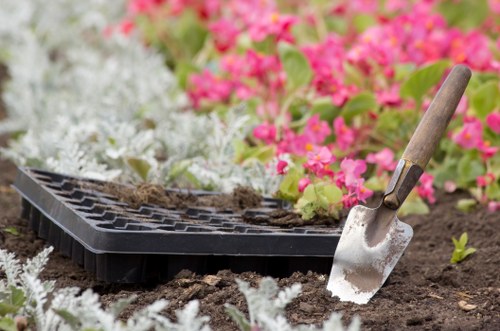
Routine maintenance is often the most effective way to stop a garden drifting into a state that feels too large a job to tackle. Our maintenance work can include grass cutting, hedge trimming, border weeding, leaf clearance and general tidying that keeps circulation through the space clear. Rather than leaving jobs until they become extensive, regular visits can keep a garden manageable and make each visit more efficient. Garden maintenance is particularly useful when the same tasks return through the growing season.
Maintenance can also be adapted to the needs of different parts of the same garden. Lawns may need a neater finish, edges may need reshaping, and planting areas may need care that avoids disturbing healthy growth. In some gardens, the priority is appearance; in others, it is access, safety or simply removing accumulated debris. We can work with the condition of the space as it stands and focus on the tasks that bring the clearest improvement first, rather than treating every outdoor area in the same way.
Useful information for a quotation can be kept simple. A short description of the garden, the type of work required and any access details is often enough to start the conversation. If the garden includes sections that need special handling, such as awkward slopes, dense planting or waste that has built up over time, mention that too. A brief note now can save time later and helps make sure the quote reflects the real scope of the job rather than a rough guess.
Lawn mowing and grass cutting

Lawns usually benefit from steady, careful cutting rather than occasional heavy treatment. Our lawn mowing and grass cutting services are suited to gardens that need a clean finish, more even growth and an appearance that feels looked after. Work can be scaled for small front lawns, larger back gardens or shared green areas that need a consistently tidy standard. Lawn mowing services are often the simplest way to keep the main surface of a garden under control.
Where mowing is only part of the task, we can combine it with edge work, trimming and removal of clippings so the lawn looks complete rather than simply shortened. Grass that has grown unevenly can sometimes need a more careful first cut before a regular pattern is restored. In some settings, the aim is to improve presentation for day-to-day use; in others, it is to bring the space back to a manageable level before longer-term care is arranged. The exact method depends on the grass condition and the finish you want.
Grass cutting can also be useful when a larger project is planned later in the year, because an improved lawn surface makes it easier to judge the rest of the garden. If you are comparing options, it helps to separate the immediate task from any future improvements. A quick cut can solve one problem, while better edging, scarifying or reseeding may be more suitable for another. Grass cutting service is a sensible starting point when the priority is a neat and even finish.
Hedge trimming and controlled shaping
Hedges can define boundaries, soften views and add structure, but they also need careful trimming to stop them becoming overgrown or uneven. Our hedge trimming work is designed to reduce excess growth, sharpen outlines and help the hedge stay within the space available. We handle both light maintenance and more substantial cuts, depending on the species, height and the condition of the growth. Hedge trimming is often best scheduled before the hedge becomes difficult to shape cleanly.
Different hedges call for different approaches. Some respond well to a light, regular trim that preserves their form, while others need more measured reduction to avoid exposing bare sections or stressing the plant. A good cut should support the hedge’s health as well as its appearance, so the timing and extent of the work matter. Where hedging is part of a wider boundary line, a neater result can also make fences, gates and nearby planting look better defined.
If your garden has several mature shrubs or mixed boundary planting, hedge trimming may be most effective when combined with general tidying and clearance. Overhanging sections can obscure paths, block light or press into neighbouring areas, so bringing them back into line can improve both appearance and practicality. For gardens that need more than clipping, we can discuss how trimming fits alongside wider maintenance or a larger refresh of the outdoor space.
Garden clearance and waste removal

Garden clearance is the right choice when the space has become cluttered with cuttings, dead growth, unwanted items or accumulated green waste. It can turn an overfilled garden into an area that is easier to use, inspect and improve. The work may include bagging, gathering and loading waste, along with removing loose material that has built up in corners, around sheds or along boundary lines. Garden clearance is especially useful after a period of neglect or before a larger change begins.
Clearance is often more than simple waste lifting. In some gardens, the job involves separating reusable features from material that should be removed, or working around beds and existing structures that are to stay in place. We can deal with growth that has spread beyond its intended area, including tangled stems, fallen branches and debris that is difficult to shift in a normal tidy-up. A careful clear-out can make later maintenance easier and reveal the real shape of the garden again.
When discussing clearance, it helps to note any items that are already stacked, whether access is straightforward and whether there are areas that need to be left untouched. If the garden contains mixed waste, overgrown sections or heavier material, that may affect how the work is organised. A clear quotation is easier when the scope is understood from the outset, especially where clearance forms part of a broader maintenance plan or a larger landscaping project.
Landscaping, decking and fencing
Some customers want maintenance alone; others are looking for a garden that functions better in everyday use. Our landscaping services can support changes to layout, borders and practical access, while decking services provide a defined surface for seating, movement or a cleaner transition between parts of the garden. These improvements can be planned alongside ordinary maintenance when the aim is to tidy, improve and structure the outdoor area in one coherent project.
Fencing is another practical part of a garden’s structure, helping to define boundaries and create a clearer frame for the space. We offer fence installation and replacement, as well as wider fencing work where a boundary line needs improvement or a damaged section needs attention. Garden fencing can support privacy, safety and appearance, and it often sits naturally alongside planting, lawn care and other surface work. The right solution depends on what needs to stay, what needs replacing and how the rest of the garden is used.
Useful commercial decisions often come down to sequencing. It may make sense to clear and tidy first, then adjust surfaces, then complete planting or boundary work once the site is ready. In other cases, a smaller intervention is enough, such as replacing one section of fencing or adding a small decked area to improve access. We can discuss which approach fits the condition of the garden, the available space and the overall outcome you want.
Tree work and larger growth control
Trees and larger woody growth need a more careful approach than ordinary trimming because the work can affect shape, health and safety all at once. Our tree services include lopping, removal and related cutting tasks for situations where branches are overextended, obstructive or no longer suitable for the area. Tree surgeon services are relevant where the task needs more than a quick cut and the tree’s condition should be considered as part of the work.
Tree-related jobs vary widely. Some involve reducing a branch line that has become too large for the garden, while others require removal of a tree that is no longer wanted or has become impractical. In certain cases, a stump or remaining root section may also need attention so the ground can be used again. Tree lopping and removal may be appropriate where the aim is to open up light, restore clearance or remove an unwanted obstruction from the space.
It is worth separating tree work from routine hedge cutting or mowing, because the tools, method and planning can be quite different. If the garden contains both ordinary maintenance tasks and a tree issue, the job can often be organised so the broader tidying is completed around the heavier work. That helps keep the space controlled while the more technical element is handled with the attention it needs.
What to include when asking for a quote

When you request a quotation, the most useful details are usually the size of the garden, the main tasks needed and any features that affect access or handling. A short list is often enough to begin with: what needs mowing, what needs cutting back, what needs clearing and whether there are surfaces, fencing or trees involved. If you are unsure how to describe the work, a simple plain-language summary is fine. Contact us when you are ready to discuss the job.
Two things help most when preparing a quote: a clear outline of the visible work and a note about anything that may alter the method, such as dense growth, awkward access or mixed waste. Photos can be helpful when they show the whole space clearly, but a description alone is still a useful start. If several tasks are involved, separating them into priorities can make it easier to compare options and decide whether the work should happen in one visit or in stages.
For larger or more varied gardens, it can also be useful to say which elements are fixed and which are flexible. For example, you may want the main clear-up completed first, with later improvements planned after the garden is back under control. This is especially helpful where landscaping, fencing or tree work may sit alongside maintenance. A well-structured enquiry gives us a better basis for a sensible quotation and a result that matches the garden’s condition.
About London
London is a city of layered districts, river crossings and long-established neighbourhoods, shaped by both historic growth and continuing change. The River Thames remains a defining feature, curving through the centre and linking a succession of bridges, quays and embankments that have influenced how the city developed. Ancient routes, Roman foundations and medieval street patterns still sit beside later Georgian squares, Victorian terraces and twentieth-century estates, giving the capital a highly varied urban texture. In many parts of London, architecture reflects a mix of civic ambition and everyday adaptation, from the grand public buildings of Westminster and the City to the more intimate streets of places such as Bloomsbury, Greenwich and Hampstead. Parks and open spaces also play a major role in the city’s character; Hyde Park, Regent’s Park, Hampstead Heath and Richmond Park each offer very different landscapes within the same metropolis. Museums, theatres, markets, galleries and concert halls add cultural depth, while areas such as South Bank, Covent Garden, Shoreditch and Notting Hill are associated with strong identities built over time rather than by design alone. Public transport, river travel and the street network tie these districts together, but London still feels like a patchwork of places, each with its own history and rhythm. Its size, density and diversity have made it one of the most recognisable capitals in the world, yet its local details remain distinct at street level: church yards, mews lanes, garden squares, canals, wharves and market streets all contribute to the city’s enduring variety.
Choosing the right service for your garden
Not every outdoor space needs a complete redesign, and not every job starts with a blank slate. Some customers simply want a reliable garden tidy, while others need a more involved mixture of cutting, clearing and boundary work. The most practical choice is usually the one that matches the condition of the space now, not an idealised version of it. That is why it helps to think in terms of the visible tasks first and the longer-term improvement second.
In commercial terms, the value often lies in clarity. A garden with overgrown edges, uneven grass or neglected corners can usually be improved without taking on work that does not yet need doing. Where there is a stronger structural issue, such as worn fencing or an awkward layout, it may be more effective to combine maintenance with landscaping or replacement work. The right mix depends on the site, the budget and how much change you want in the finished result.
If you are ready to move ahead, take a moment to list the most important tasks and then request a quotation that reflects them. Whether you need mowing, hedge trimming, clearance, tree work or a broader garden refresh, the aim is to give you a practical route from an untidy outdoor area to one that feels usable again. Garden services can be arranged around the specific work your property needs.